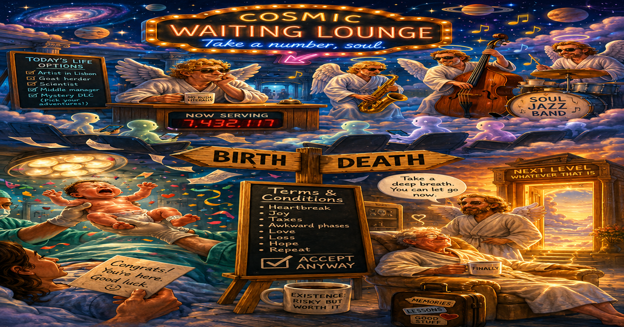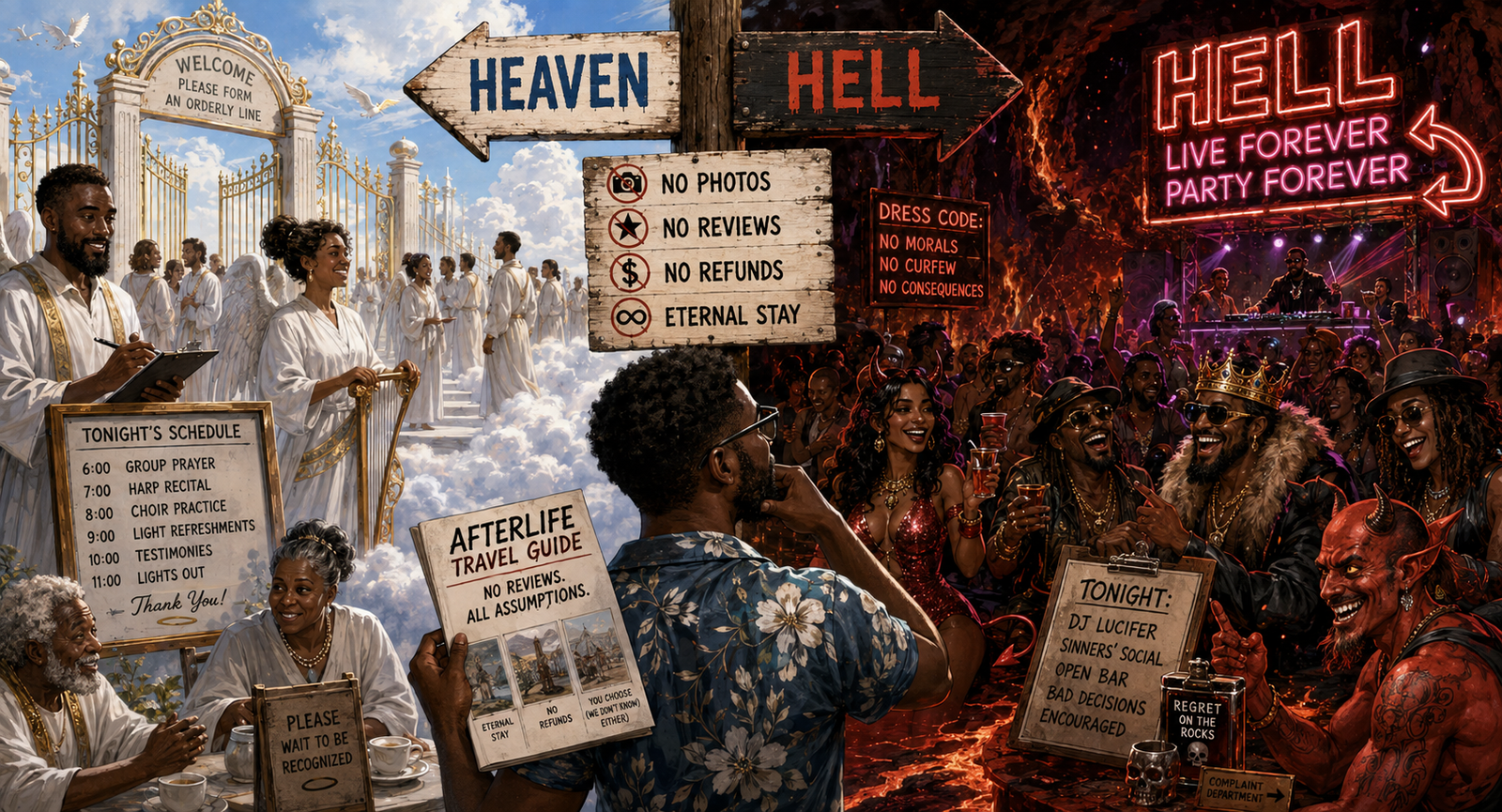
There are two destinations people have spent thousands of years passionately debating, recommending, avoiding, threatening one another with, and confidently describing. Curiously, they are also the only two places on the map with absolutely no verified customer reviews. Every hotel in Miami has thousands of opinions. The motel off Exit 27 with the flickering vacancy sign has photos, ratings, and a man named Carl explaining that the ice machine is “temperamental.” Yet Heaven and Hell, allegedly the two most important destinations in existence, have somehow escaped modern consumer scrutiny entirely.
Think about how reckless this is. We won’t buy a toaster until we’ve compared three brands, watched six YouTube reviews, and read complaints from strangers who seem personally offended that the crumb tray is difficult to remove. Choosing a restaurant requires studying pictures of appetizers from seventeen different angles before committing to mozzarella sticks. Yet when it comes to eternity, people suddenly become astonishingly relaxed. “Oh yes, Heaven sounds lovely.” Based on what exactly? A brochure? An ancient manuscript? Your cousin Larry, who insists he had a near-death experience after eating questionable shrimp at a church picnic?
The marketing departments deserve recognition because they have accomplished something no travel agency in history has managed. They convinced billions of people to make permanent reservations without offering a cancellation policy, a virtual tour, or even a grainy photograph taken from the lobby. Imagine an airline announcing, “We cannot tell you where we’re going, how long the flight will last, what the accommodations look like, or whether you’ll enjoy the experience, but once the aircraft departs, there are no return tickets.” Most of us would immediately close the browser tab. Somehow, when the destination involves eternity, we nod thoughtfully as though this sounds perfectly reasonable.
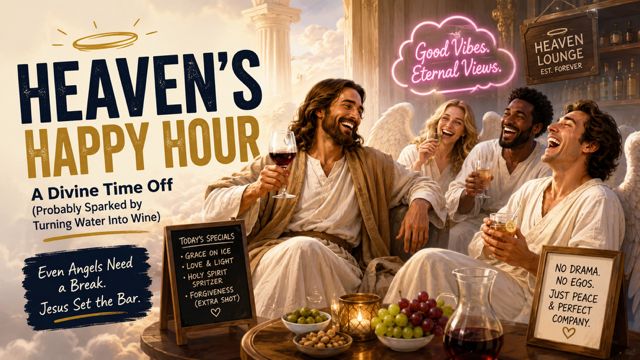
I have also begun wondering who writes the promotional material. Heaven has enjoyed spectacular branding for centuries. Streets of gold. Eternal peace. No suffering. No tears. Harps, clouds, and reunions with loved ones. It sounds wonderful until practical questions begin creeping into the conversation. Streets made of gold sound expensive, but they also sound incredibly slippery after rain. Does anyone sweep them? Is there a public works department? Does Heaven have municipal budgeting meetings? Somewhere there has to be an angel explaining why the northwest quadrant needs another cloud maintenance crew while another angel argues that the harp orchestra has exceeded its annual funding allocation.
Then there is the population issue, which nobody seems interested in discussing. If humanity has existed for thousands of years, Heaven could potentially have welcomed an astonishing number of arrivals. We are not talking about a quiet village tucked behind pearly gates anymore. We are discussing one of the largest population centers imaginable. How do introductions even work? “Hello, I’m David.” Which David? There have been millions. “No, the other David.” At some point, even eternity requires a naming convention more sophisticated than first names.
Meeting famous historical figures sounds exciting for approximately twelve minutes. After that, they become regular neighbors. Imagine finally encountering Leonardo da Vinci, only to discover he has become the kind of retiree who spends every afternoon explaining perspective techniques whether anyone asked or not. Napoleon corners guests during dinner to clarify that several historical documentaries were unfair. Julius Caesar insists his autobiography was taken out of context. Shakespeare becomes impossible to avoid because everyone keeps asking whether he really wrote all those plays, and he has clearly answered that question somewhere around forty-seven million times.
There is also the uncomfortable question nobody asks out loud because it tends to get you uninvited from family dinners. Which place actually throws the better party?
Let’s be honest about human history. The people who have acquired legendary reputations for excessive celebration, questionable decision-making, and spectacular stories rarely sound like they spent Friday nights quietly reflecting on moral philosophy. If the guest list includes every pirate, every rock star who destroyed a hotel room, every emperor who thought “moderation” was a contagious disease, every Vegas regular, every outlaw, every bootlegger, every court jester, and that one uncle who somehow gets banned from weddings despite not being in the wedding party, Hell starts looking suspiciously like it has a very active social calendar.
Heaven, by comparison, has cultivated the image of a place where everyone smiles politely, nobody interrupts, and every gathering concludes at a perfectly reasonable hour. That sounds peaceful until you imagine the invitation. “Please join us this Friday evening for eternal fellowship. Light refreshments will be served. Harp recital begins promptly at seven. Joyful yet orderly singing concludes at nine. Please remember that sandals are preferred.” There is nothing objectively wrong with that evening, but nobody has ever stumbled into work on Monday saying, “You should have seen what happened after the cloud choir rehearsal.”
Hell, on the other hand, has all the marketing ingredients of the world’s most infamous nightclub. Every fascinating historical rogue eventually seems to end up on the guest list. You start imagining conversations between Cleopatra, Blackbeard, Casanova, Bonnie and Clyde, Oscar Wilde, and half the members of every notorious rock band ever assembled. It sounds less like eternal punishment and more like the opening scene of a wildly overbudget historical crossover movie.
Of course, that illusion probably lasts about six minutes. Human beings have an extraordinary talent for ruining every party they attend. The pirates argue over parking. The philosophers insist on defining the word “fun” before anyone can enjoy themselves. Casanova cannot stop introducing himself. The musicians spend three centuries debating who deserves top billing. Somewhere in the corner, an emperor has already declared himself chairman of the entertainment committee and immediately scheduled mandatory meetings to improve morale. Leave it to humanity to transform eternal debauchery into a homeowners association with bylaws.
Then there is romance, another subject surrounded by confident assumptions and remarkably little evidence. Does Heaven have dating? Does everyone simply arrive with the relationships they left Earth with? What happens if your spouse remarries after you die, and everyone eventually ends up in the same neighborhood? Suddenly eternity begins to resemble Thanksgiving dinner with infinitely higher stakes. Hell is no easier to picture. If history is any guide, eternal flirtation quickly becomes eternal drama, complete with love triangles, spectacular misunderstandings, and enough jealousy to require its own administrative department. The more I think about it, the less convinced I become that either destination has solved humanity’s oldest social problems. We have been turning paradise into paperwork and parties into arguments since the invention of fermented fruit.
The reunion with loved ones also deserves a little logistical planning. Families are complicated enough at Thanksgiving when everyone can leave after dessert. Eternity removes that convenient escape hatch. The uncle who cornered you every holiday to explain why gasoline was cheaper in 1973 now has infinite time to finish the story. Grandma still insists everyone eat another helping. The cousin who started cryptocurrency conversations in 2021 has not discovered a new hobby because time no longer exists. Paradise suddenly depends less on perfection and more on whether seating arrangements were thoughtfully designed.
Hell, meanwhile, suffers from catastrophic public relations. Everything about it sounds unpleasant, but I suspect centuries of exaggeration have obscured the smaller, more realistic annoyances that would truly test human patience. Endless fire is dramatic, but eternal customer service feels more plausible. Imagine spending forever trying to reset a forgotten password while every verification code expires twelve seconds before you receive it. Every phone call begins with, “Your estimated wait time is four minutes,” but the recording has been repeating since the Roman Empire. The hold music is technically different every hour, yet somehow every song sounds suspiciously like an enthusiastic recorder recital from an elementary school talent show.
The paperwork alone could justify the reputation. Every form requires another form before processing can begin. The signature must be blue ink, except on Tuesdays when black ink becomes mandatory. You stand in the correct line for three hours before learning you actually belong in the adjacent line, where someone cheerfully informs you that office hours ended two minutes ago. Your number is always next, right until an employee announces they are leaving for lunch. Lunch, naturally, lasts three centuries.
Technology would become an especially elegant form of torment. Every software update begins automatically moments before an important deadline. Your internet connection achieves impressive speeds until you attempt to upload a file, at which point it develops the confidence of a frightened turtle. Every printer reports that it is ready, connected, and functioning perfectly while steadfastly refusing to produce a single page. Somewhere an IT technician smiles sympathetically before asking whether you have tried turning existence off and back on again.
Even transportation deserves consideration. Heaven probably has immaculate traffic because everyone is patient and considerate, which sounds refreshing until you remember that patient drivers wave every single car through the intersection. Nobody wants to go first. Four-way stops become philosophical discussions about humility. Hell, by contrast, features drivers who never use turn signals, merge directly into stationary traffic, and somehow locate the only parking space just before you reach it. Neither option inspires tremendous confidence.
Then there is the awkward matter of hobbies. Eternity is an astonishingly long time. You can only learn pottery so many times before wondering whether there are intermediate leagues for competitive cloud sculpting. Chess champions eventually run out of worthy opponents because everyone has had several thousand years to practice. Golf loses its challenge when nobody slices the ball into the lake. Book clubs become difficult because eventually everyone has read every book ever written, including the disappointing sequels authors wisely never published on Earth.
Perhaps the greatest mystery is why humanity argues so passionately about destinations nobody can verify firsthand. We defend detailed architectural blueprints of places we have never visited with the confidence of lifelong residents. We debate neighborhoods, climates, admission policies, and daily routines as though we own vacation homes there. If someone claimed intimate knowledge of an island that appears on no map and has never welcomed a visitor back, we would politely recommend additional rest. Yet discussions about the afterlife somehow receive an exemption from our normal standards of evidence because certainty is apparently more comforting than curiosity.
Maybe that explains the silence. Perhaps it is not that nobody wants to send a review. Perhaps the review system simply doesn’t exist because every traveler finally realizes something embarrassingly obvious upon arrival. They spent their entire lives obsessing over the destination while paying surprisingly little attention to the journey that occupied every ordinary Tuesday afternoon, every conversation with a friend, every laugh that arrived unexpectedly, and every chance to make this temporary address a little better than they found it.
Until someone figures out how to leave a verified rating complete with photographs of the accommodations, I plan to remain cautiously undecided. I have learned enough from modern travel to distrust destinations with flawless advertising, suspiciously enthusiastic brochures, and absolutely no customer feedback. Besides, every package I have seen so far comes with a one-way ticket, and I have never been particularly fond of non-refundable reservations.