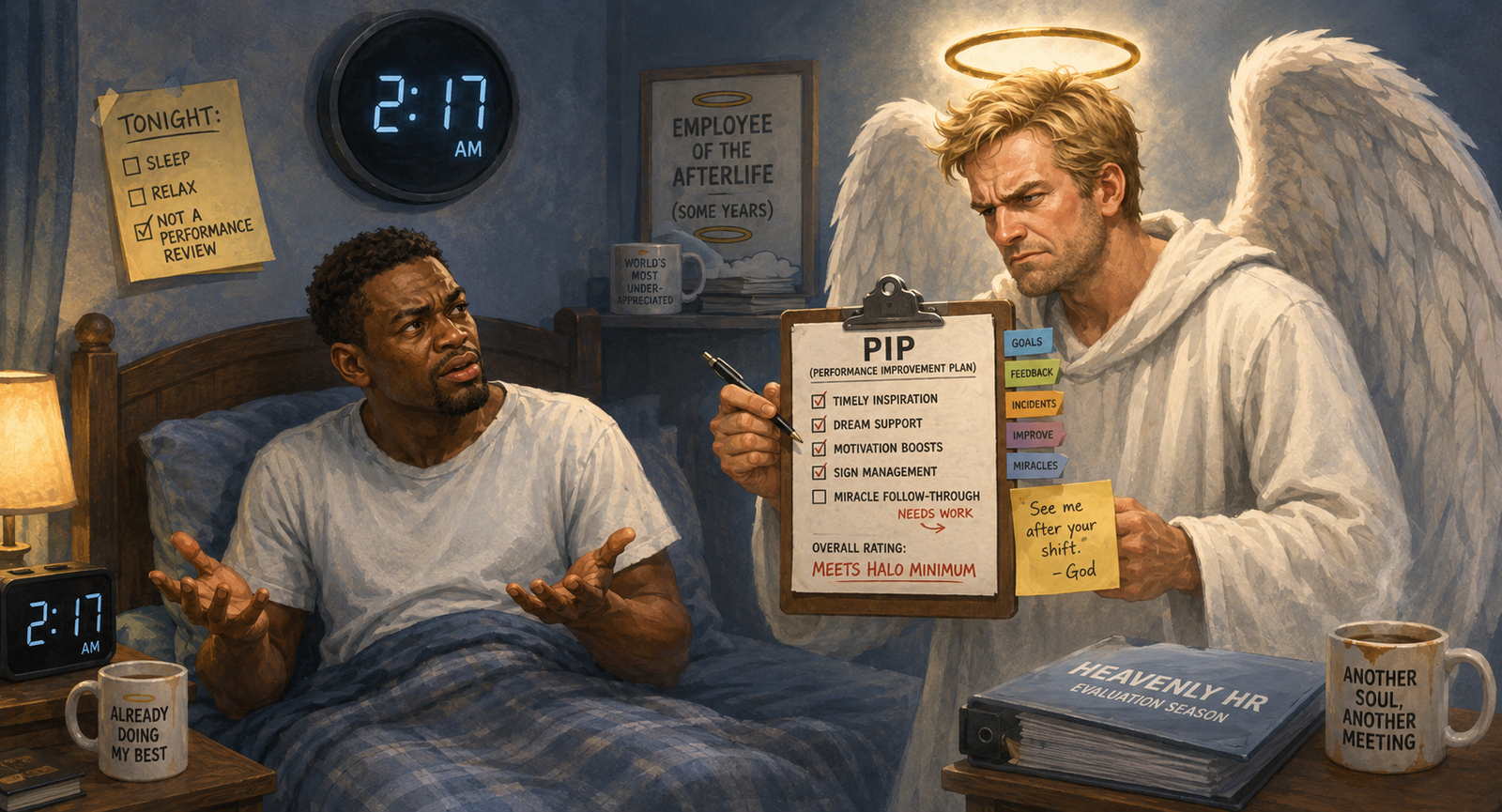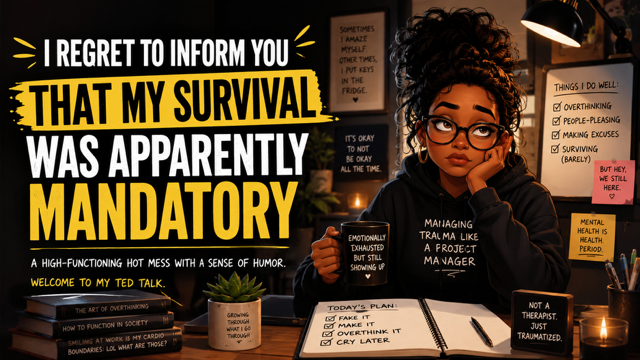
There’s a very specific kind of disrespect life reserves for people who are objectively doing well. Not fake social media “soft life” well where somebody is one missed payment away from selling waist beads on Etsy. I mean real, measurable, tax-paying adult well. Stable marriage. Loving family. Good career. Bills mostly paid on time. Respectable credit score. A fridge containing fruit you bought with sincere intentions before watching it slowly die with the dignity of a Victorian child. On paper, everything is fine. And yet somehow your brain still occasionally clocks into work at 2:13 a.m. and whispers, “Have we considered vanishing mysteriously and becoming a cautionary podcast episode?”
Now before somebody forwards this article to a corporate wellness officer named Denise, relax. We are allowed to discuss difficult things honestly. Dark humor is one of the last functioning public utilities in this country. Besides, if you cannot joke about your own mind trying to kill you while simultaneously reminding you about tomorrow’s calendar invite, what exactly are we doing here?
The strange thing about surviving multiple suicide attempts is that afterward, life becomes profoundly awkward. The movies lied to us. There’s no cinematic orchestra. No beautiful monologue in the rain. No artful close-up while everybody finally understands your pain. Real life is much less glamorous. Real life is surviving and then immediately realizing you still have emails to answer. You’re sitting there emotionally demolished while your phone lights up with messages like, “Just circling back on this tasker.” Nothing humbles a person faster than realizing capitalism fully expects you to continue participating after an existential collapse.
And nobody really knows what category to place you in after that. You’re too functional to scare people properly. Too articulate to fit their image of someone struggling. Too successful for your sadness to seem legitimate. People expect depressed individuals to look disheveled and stare out rainy windows while indie music plays softly in the background. Meanwhile, many of us are replying “Absolutely, happy to support” in professional emails while internally feeling like abandoned lighthouse keepers from the 1800s.
That’s the dangerous thing about high-functioning depression. It wears business casual. It attends meetings. It remembers birthdays. It makes dinner reservations and asks thoughtful follow-up questions. Meanwhile your internal monologue sounds like a hostage negotiation conducted by exhausted philosophers. Sometimes suicidal thoughts are not dramatic at all. Sometimes it’s less “I want to die” and more “I genuinely cannot continue carrying the administrative burden of existing.” There’s a difference. A major one.
And I think many highly competent people accidentally create this problem for themselves because we learn early that usefulness earns safety. Be smart. Be adaptable. Be resilient. Be excellent under pressure. Society absolutely loves a functional trauma survivor. You become the reliable one. The composed one. The one who can navigate chaos while making everybody else feel comfortable. Meanwhile your inner child is somewhere deep inside holding a flickering lantern screaming, “HELLO? ARE WE EVER GOING TO PROCESS ANY OF THIS?” But because you answer emails quickly and maintain eye contact during conversations, nobody notices. Including you.
So naturally, you start stacking accomplishments like emotional sandbags against collapse. Degrees. Promotions. Certifications. Leadership courses. Titles. At some point your personality quietly transforms into an expensive LinkedIn profile with anxiety hidden underneath it like exposed wiring. Nothing says “I’m psychologically thriving” like receiving praise for your professionalism while privately googling whether emotional exhaustion can physically kill a person. And the truly offensive part is that achievement does not cure inadequacy. It removes excuses. That realization hits like a folding chair to the soul.
Because secretly you think there must be a finish line somewhere. Surely once you accomplish enough, your brain will finally release the official internal statement declaring you worthy of existing. Wrong. The brain immediately updates the software and invents a brand-new insecurity. Congratulations on your success. Unfortunately we noticed you are still fundamentally yourself.
And if you grew up navigating multiple cultures, countries, identities, expectations, or constantly adapting to survive different environments, things become even more psychologically bizarre. You become emotionally multilingual. Different versions of yourself emerge for different rooms. Professional You. Family You. Funny You. Trauma You. Hyper-competent You. Emotionally unavailable You. Eventually your personality starts feeling less like a coherent identity and more like a coalition government barely holding itself together through procedural agreements and caffeine.
Honestly, some of us are not depressed in the traditional sense. We are emotionally overtrained. Like rescue dogs that still flinch in safe homes because their nervous systems no longer trust peace. The body remembers every version of you that had to survive. Even after your life improves, your nervous system continues operating like an underfunded emergency management agency. Constantly scanning for danger. Constantly anticipating collapse. Constantly preparing for abandonment, humiliation, failure, or emotional catastrophe.
And because high-functioning people rarely collapse publicly, we leak privately. We sit in parked cars for twenty extra minutes before going inside. We stare at ceilings replaying conversations from seven years ago like the FBI is reopening the case. We stay perpetually busy because silence feels suspicious. We intellectualize emotions until our sadness sounds like a doctoral dissertation. Humor becomes survival equipment because if you can make people laugh while discussing despair, then technically despair works for you now. That’s psychological warfare. Strategic emotional rebranding.
But surviving multiple attempts taught me something deeply irritating. Some part of me clearly wanted to live. Which honestly feels like betrayal sometimes. Because now I have responsibilities. Healing. Self-awareness. Boundaries. Communication. Drinking water intentionally. Absolutely exhausting developments all around.
Still, I’ve realized something important. Most people who struggle with suicide do not necessarily want death itself. They want interruption. Relief. Quiet. They want five uninterrupted minutes where their mind is not performing emotional parkour through every insecurity, memory, fear, expectation, and disappointment simultaneously. They want the pressure to stop. They want to exist without constantly needing to earn their place in the world first.
That realization changes the conversation. Because if the issue is relief rather than death, then the real question becomes: what kind of life is psychologically survivable? Not impressive. Not optimized. Not performative. Survivable. A life where rest is allowed. Where worth is not tied exclusively to productivity. Where vulnerability is not immediately converted into liability. Where you are allowed to exist as a person rather than a constantly functioning machine disguised as a responsible adult.
And maybe that’s the hardest lesson survival teaches you. After enough failed exits, life stops feeling theoretical. You can no longer romanticize oblivion because apparently some stubborn part of you refused to leave. Whether that was biology, instinct, love, fear, God, ancestors, unfinished purpose, or simple cosmic bureaucracy, I genuinely do not know. But eventually you are forced to confront the deeply inconvenient possibility that your survival may actually require participation.
Terrible news honestly.
Because now you have to build a life you do not constantly fantasize about escaping from.
And that takes work. Slow, irritating, expensive work. The kind involving uncomfortable conversations, therapy sessions with suspiciously soft lighting, emotional honesty, and occasionally admitting you are not okay before your nervous system files a formal complaint.
Still, there is something strangely comforting about realizing how many people quietly carry this weight while appearing completely functional. Human beings are incredible that way. Emotionally catastrophic, but incredible.
So if you are reading this while silently holding yourself together through caffeine, dark humor, competence, obligation, and the faint hope that one day you might finally unclench your shoulders for the first time since 2008, congratulations. You too may qualify as a high-functioning emotional cryptid.
The good news is you are not alone.
The bad news is apparently survival was mandatory.
And unfortunately, we still have meetings tomorrow.