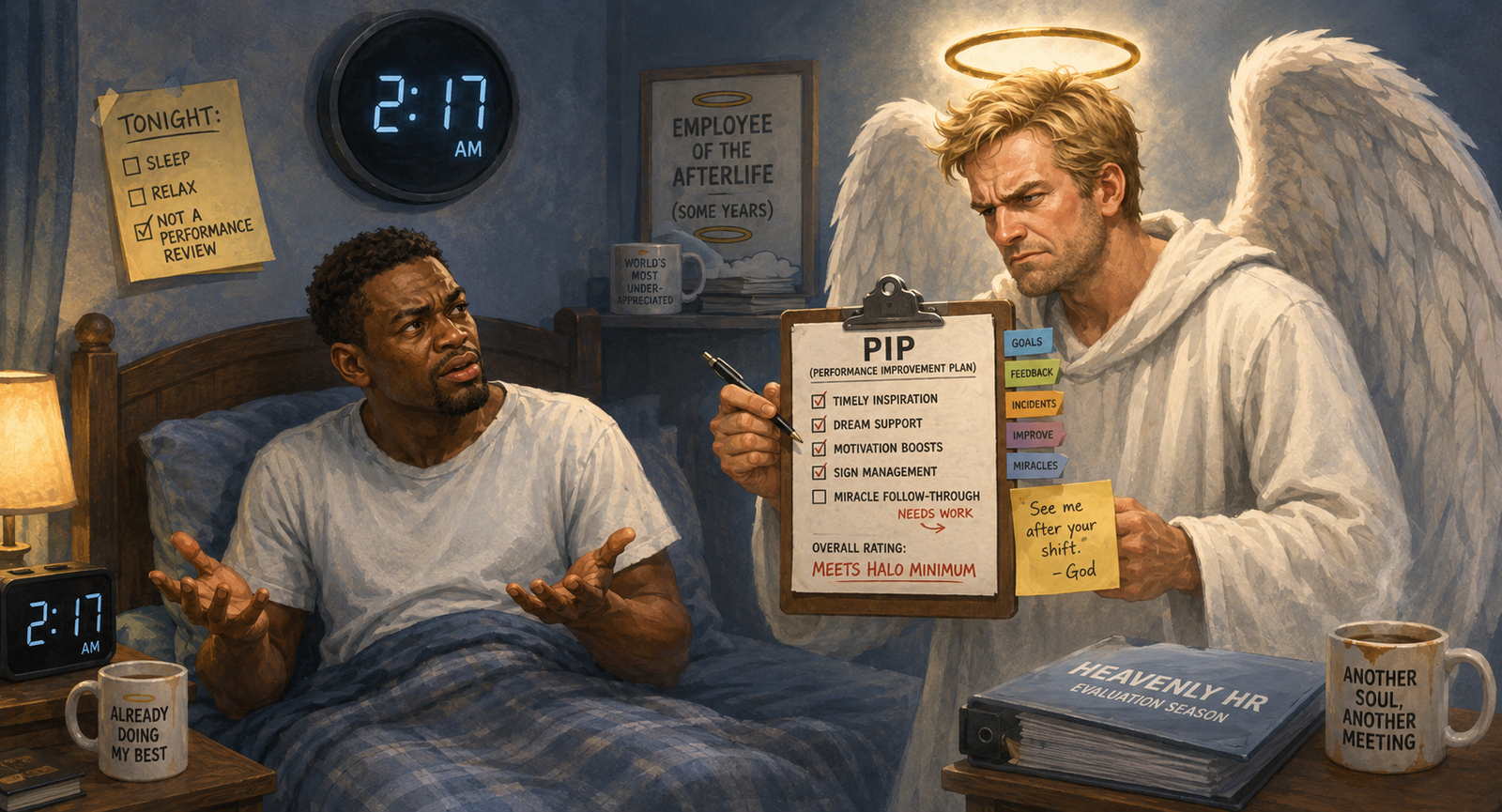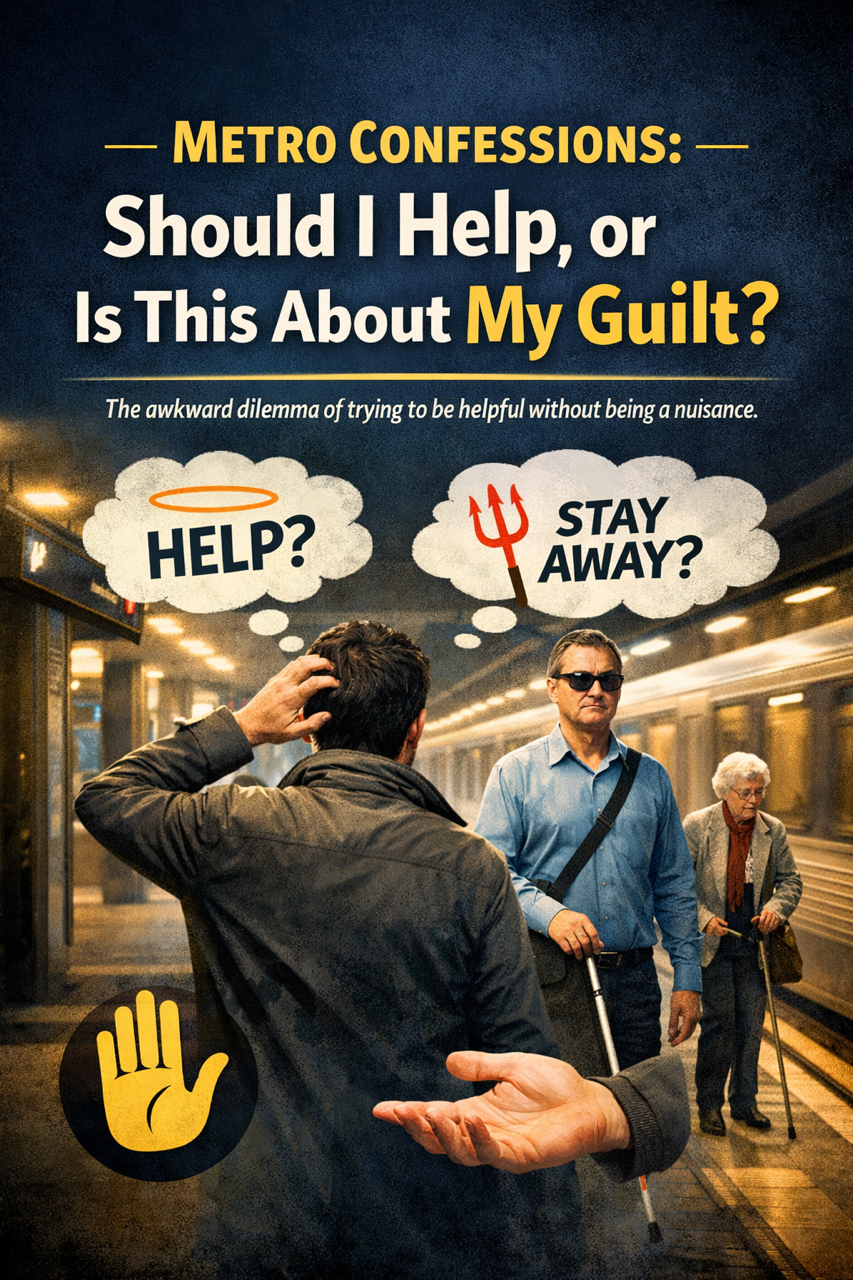
There are few things more humbling than realizing your moral crisis is happening entirely inside your own head while the other person has already mastered the situation.
You know the moment.
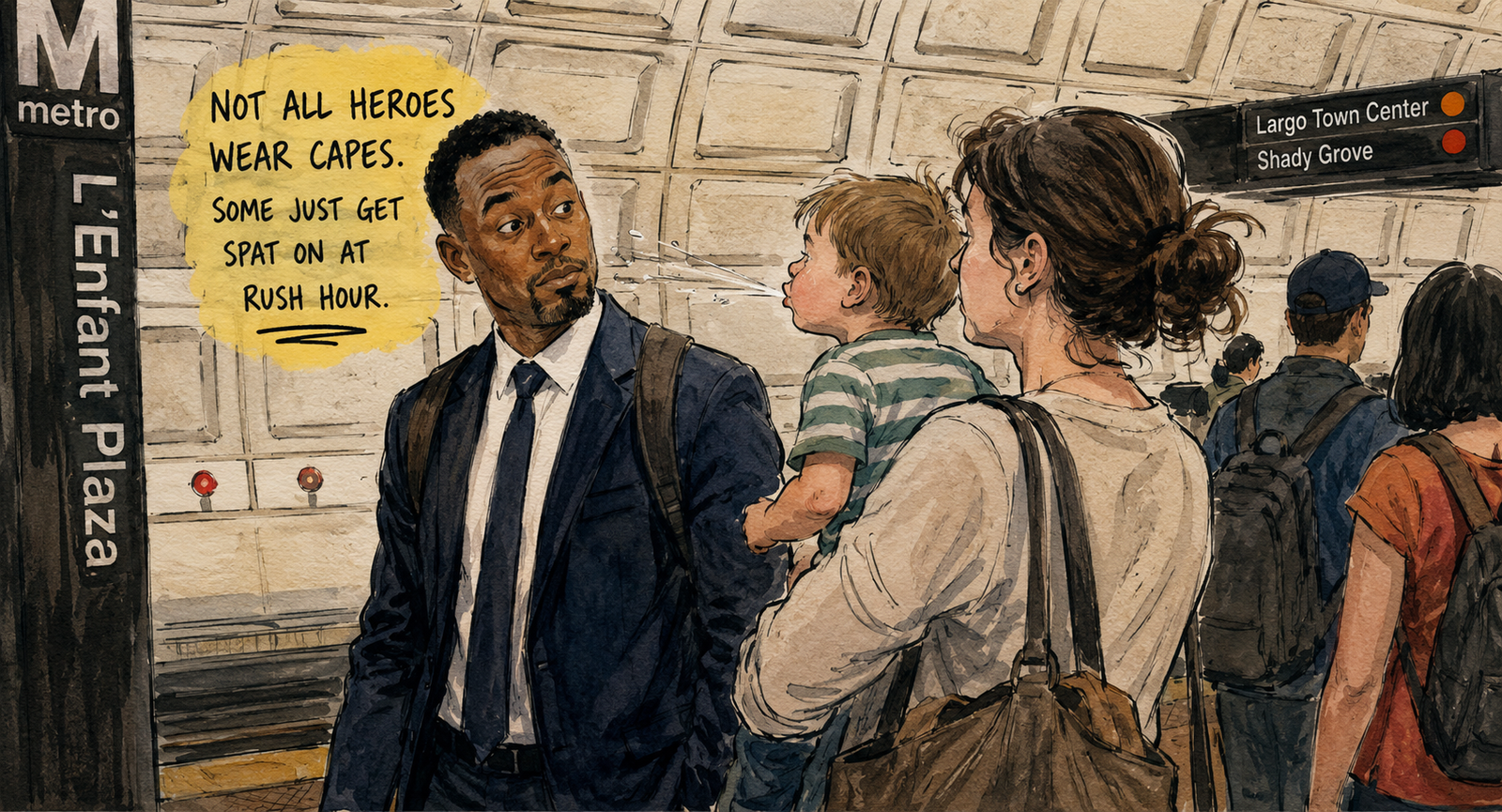
You’re walking through the station, already irritated because Metro has once again found a creative way to make movement feel optional, and then you see someone who is visually impaired or has a mobility issue navigating the space alone. Immediately, your spirit leaves your body and convenes a private ethics hearing.
Should I help?
Would that be kind?
Would that be patronizing?
Am I compassionate?
Am I annoying?
Have I mistaken another grown adult for a community service opportunity?
Now suddenly this stranger is just trying to get through the station, and you are in the middle of a full internal moral assassination.
Because on the one hand, you do not want to be the kind of person who sees someone possibly struggling and just glides by like your humanity is on airplane mode. On the other hand, these are people who have likely been navigating the world with more competence, skill, and patience than you bring to opening a stubborn umbrella.
And that is where the guilt begins.
You are not sure whether helping is the decent thing to do or the exact sort of unsolicited interference that makes people hate the public. Society, of course, offers no useful guidance here. It just leaves you standing on a platform trying to calculate the difference between empathy and disrespect in under four seconds.
Modern public life has created a very unstable etiquette.
You are supposed to be aware, but not intrusive. Helpful, but not presumptuous. Warm, but not weird. Present, but not overfamiliar. It is basically a social obstacle course designed by people who have never had to make eye contact with a stranger near an escalator.
And the worst part is that sometimes the person you are worrying about is clearly doing fine. Better than fine, actually. They are moving with purpose. They know where they are going. They have a system. They are composed. Meanwhile you, with all your allegedly standard-issue faculties, are one missed train away from collapse and still somehow think you may be the operational asset in this interaction.
That is the insult.
Not theirs. Yours.
Because if we are honest, part of the discomfort is not even about whether they need help. It is about the unpleasant realization that someone else may be carrying a visible challenge with more grace than you carry mild inconvenience. They are navigating stairs, crowds, noise, bad design, and public indifference. You are spiraling because the train said “delayed” without enough emotional support in the announcement.
It is deeply clarifying.
Of course, there is also the matter of not wanting to become one of Those People. You know the type. They do not offer help. They deploy it. They swoop in. They grab elbows. They seize bags. They start steering human beings around like they are loading cargo at a regional airport. No consent. No question. Just pure self-appointed heroism.
That cannot be the standard.
Nobody wants to be remembered as the person who turned basic public courtesy into an unsolicited hostage extraction.
At the same time, doing nothing can feel ugly too. Especially when your better instincts are tapping you on the shoulder asking whether community is real or just one of those words people use in nonprofit mission statements before cutting the budget.
So now you keep walking, but not mentally.
Mentally, you are still back there.
Should I have said something?
Was I cold?
Was I cowardly?
Should I turn around?
No, now it’s weird.
But maybe weird is better than indifferent.
No, now it looks like delayed guilt.
Now it looks like I ignored them, got judged by heaven, and came back under spiritual pressure.
Which, frankly, is not inaccurate.
And I think that is the real issue. Most of us are not confused because we lack compassion. We are confused because we are trying to reconcile compassion with dignity. We do not want to ignore people, but we also do not want to treat capable adults like they are waiting for our personal intervention to complete the commute.
That distinction matters.
So perhaps the answer is less dramatic than our inner courtroom would like. Perhaps the correct move is not to assume, not to impose, and not to perform goodness like you are being evaluated for sainthood by the station cameras.
Perhaps the move is simply to ask.
Briefly. Normally. Respectfully.
“Would you like any help?”
That’s it.
No lunging. No grabbing. No tragic facial expression. No overcompensating tone like you are narrating your own moral growth. Just one straightforward question that leaves the other person with the most important thing in the interaction: control.
They can say yes.
They can say no.
They can ignore you entirely.
And all three outcomes are acceptable, because the point is not to prove that you are a good person. The point is to behave like one.
That is what makes this so irritating, actually. The answer is mature, simple, and emotionally unspectacular. Exactly the kind of answer our minds refuse because we were hoping for something more cinematic. We wanted either heroic intervention or a clean excuse. What we got instead was adult social conduct.
Terrible news for the melodramatic among us.
So, no, I do not think you are a horrible person for having that moment. I think you are a commuter with a conscience and too much imagination. That is different.
Hesitating does not make you cruel.
Offering does not make you noble.
Hovering definitely makes you strange.
The goal is not perfection. The goal is not to transform every passing moment into a referendum on your soul. The goal is to be decent without making the interaction about your decency.
Ask when appropriate. Respect the answer. Keep moving.
That is probably the best any of us can do in public now.
Because on the Metro, surviving a commute while preserving another person’s dignity and not auditioning as their unsolicited guardian is already an elite moral performance.
And if nothing else, let us all be grateful that some people have mastered life well enough to leave the rest of us looking spiritually underqualified on a Tuesday platform.