Father’s Day arrives every year with remarkable confidence for a holiday that nobody seems entirely prepared for.
As a child, Father’s Day looked simple. You made a card with uneven handwriting, glued some macaroni to construction paper, and informed your father that he was the greatest dad in the world despite having conducted absolutely no market research on the subject. The standards were low, the expectations manageable, and nobody required a strategic plan.
Then one day you wake up and discover you are the father.
Nobody warns you that this transition happens with the speed and confusion of an airport gate change. One moment you are trying to avoid becoming your parents. The next, a seven-year-old is asking questions sophisticated enough to qualify for a congressional hearing while you stand in the kitchen pretending to understand how taxes, emotional regulation, and school lunch forms work simultaneously.
This Father’s Day, my daughter and I were sitting together discussing one of the many topics that only children can approach with complete sincerity. Adults spend years constructing elaborate social filters to avoid sounding ridiculous. Children possess no such limitations. They simply walk directly into the deepest philosophical questions imaginable wearing mismatched socks and carrying half a granola bar.
I asked her what she thought made someone a good father.
She considered the question carefully, which is always slightly alarming. Fast answers from children are usually harmless. It is the thoughtful pauses that should concern you.
Finally, she said, “I think a good father is someone whose child still wants to spend time with him when she doesn’t have to.”
I laughed.
Then I stopped laughing because that answer was significantly better than anything I would have produced.
Adults tend to evaluate fatherhood using metrics. Did you provide? Did you protect? Did you teach? Did you show up? Did you sacrifice enough? We create spreadsheets for everything because numbers make uncertainty feel manageable.
Children use entirely different criteria.
They do not care about your strategic vision.
They do not care about your professional accomplishments.
They do not care that you answered seventeen emails before breakfast.
They simply want to know whether your presence feels like a burden or a gift.
This realization is inconvenient because it eliminates most of the categories in which adults enjoy keeping score.
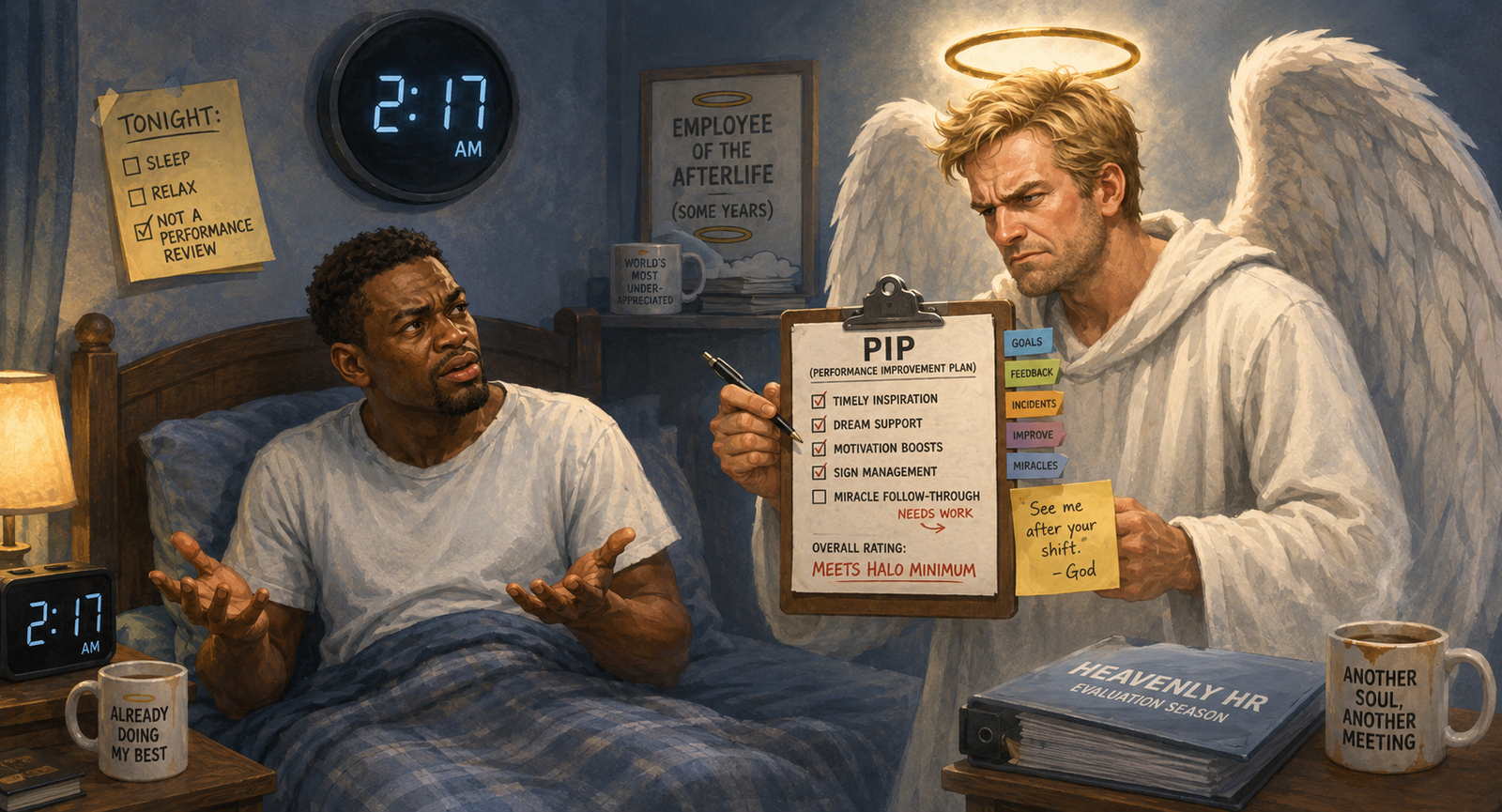
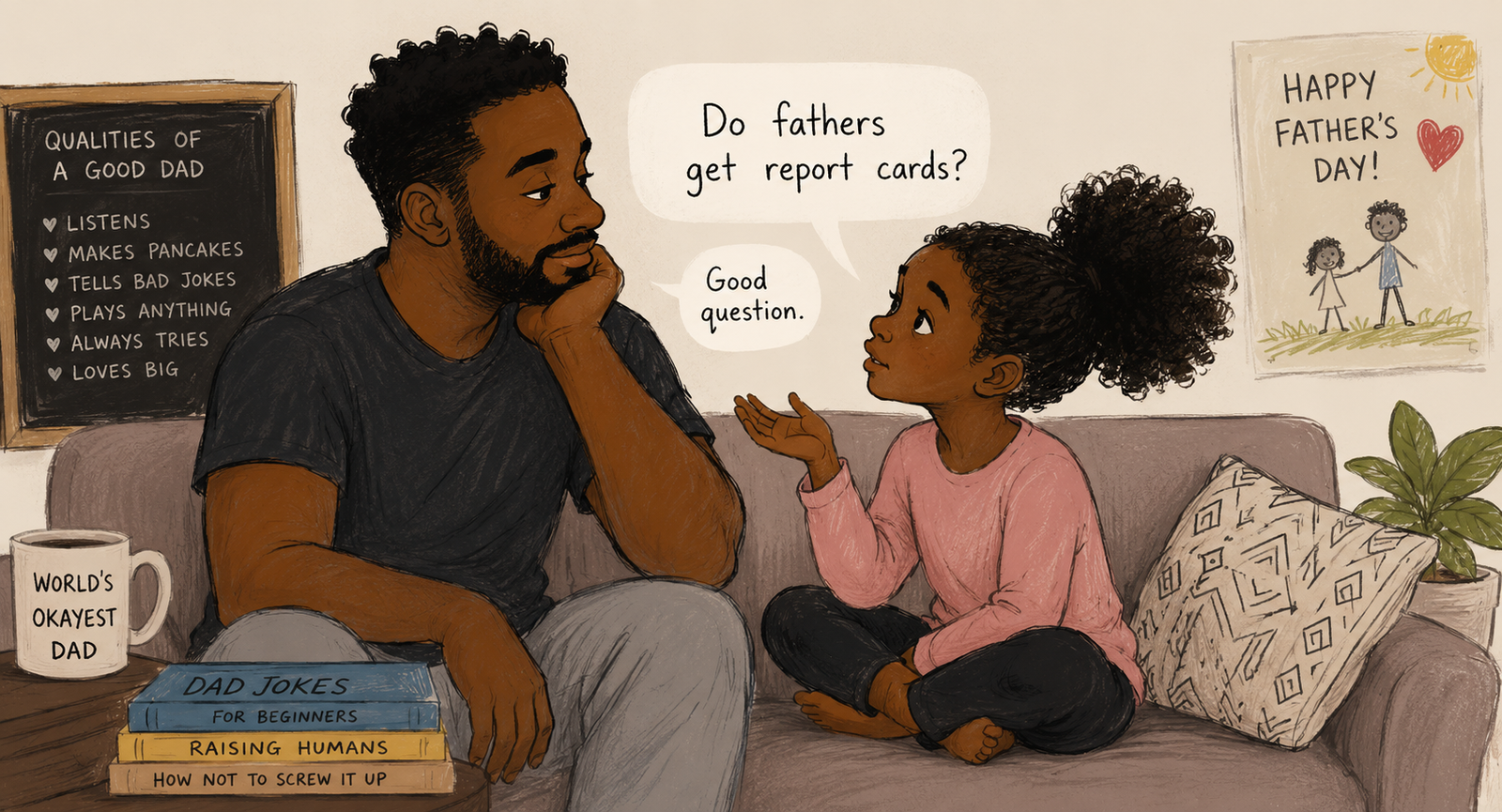
My daughter then asked me whether fathers get report cards.
An excellent question.
I informed her that they do not.
She looked genuinely disappointed by this.
“That seems unfair,” she said. “How do they know if they’re improving?”
Again, a devastatingly good point.
Most fathers spend an extraordinary amount of energy wondering whether they are succeeding. We compare ourselves to impossible standards assembled from memory, guilt, social media, and selective nostalgia. We remember the mistakes with perfect clarity and the victories only vaguely. We notice every occasion when we lose patience and somehow forget the hundreds of ordinary moments that quietly build trust.
Meanwhile, our children are often evaluating something much simpler.
Were you present?
Did you listen?
When I told you about a dream involving pirate penguins and a talking refrigerator, did you act like this was important information?
Because from a child’s perspective, it absolutely is.
The older I get, the more I suspect that fatherhood is not primarily about producing answers. It is about remaining available for questions.
Questions about nightmares.
Questions about space.
Questions about death.
Questions about why adults claim to be in charge while clearly improvising their way through existence.
Questions that begin with, “Dad, can I ask you something?” and end forty-five minutes later with a discussion about whether fish experience disappointment.
The challenge is that children are conducting these interviews while fathers are still undergoing construction themselves.
Nobody reaches parenthood fully formed.
We are all carrying unfinished pieces.
Unresolved fears.
Old disappointments.
Mistakes that still wake us up at three in the morning.
Yet somehow we are entrusted with helping another human being navigate reality.
The arrangement feels suspiciously optimistic.
Perhaps that is why Father’s Day makes me reflective rather than celebratory.
The day is less about receiving appreciation and more about recognizing responsibility. Not the heavy dramatic version that appears in movies, but the quieter obligation of influence. Children absorb far more than instructions. They absorb reactions. They observe habits. They notice how we treat strangers, handle setbacks, respond to disappointment, and carry ourselves through ordinary days.
Which means fatherhood is not really a speech.
It is a demonstration.
A long one.
Conducted daily.
Without commercial breaks.
Before we finished talking, I asked my daughter what she hoped she would remember about me when she was older.
She did not hesitate.
“That you always talked to me like I was already a person.”
Of all the gifts I received this Father’s Day, that one will be difficult to top.
Because perhaps that is the entire assignment.
Not creating perfect children.
Not manufacturing ideal futures.
Not producing miniature versions of ourselves.
Simply recognizing that these small people arrive carrying their own minds, their own humor, their own stubbornness, and their own remarkable way of seeing the world.
Our job is not to finish the story.
Our job is to accompany them long enough that they become confident enough to write the next chapters themselves.
And if we are fortunate, somewhere along the way, they will occasionally pause, look back, and decide we are still worth talking to even when they no longer have to.
So to every father spending today wondering whether he is doing enough, saying enough, teaching enough, or somehow getting it all wrong, remember that your children are probably keeping score very differently than you are. They are measuring your laughter, your patience, your attention, your willingness to listen to stories that make no sense and answer questions that have no answers. Happy Father’s Day to the dads who are still learning, still showing up, and still making room on the couch for one more conversation. You may be giving your children memories they will carry for the rest of their lives.