The sea doesn’t just wash things away.
It keeps receipts.
Not paper ones—salt ones. The kind that stick to your skin after you’ve told yourself you’re “fine,” the kind that settle into your throat after someone says “calm down” like calm is a product you can buy at retail, the kind that show up in your body before your mind has even agreed there’s a problem.
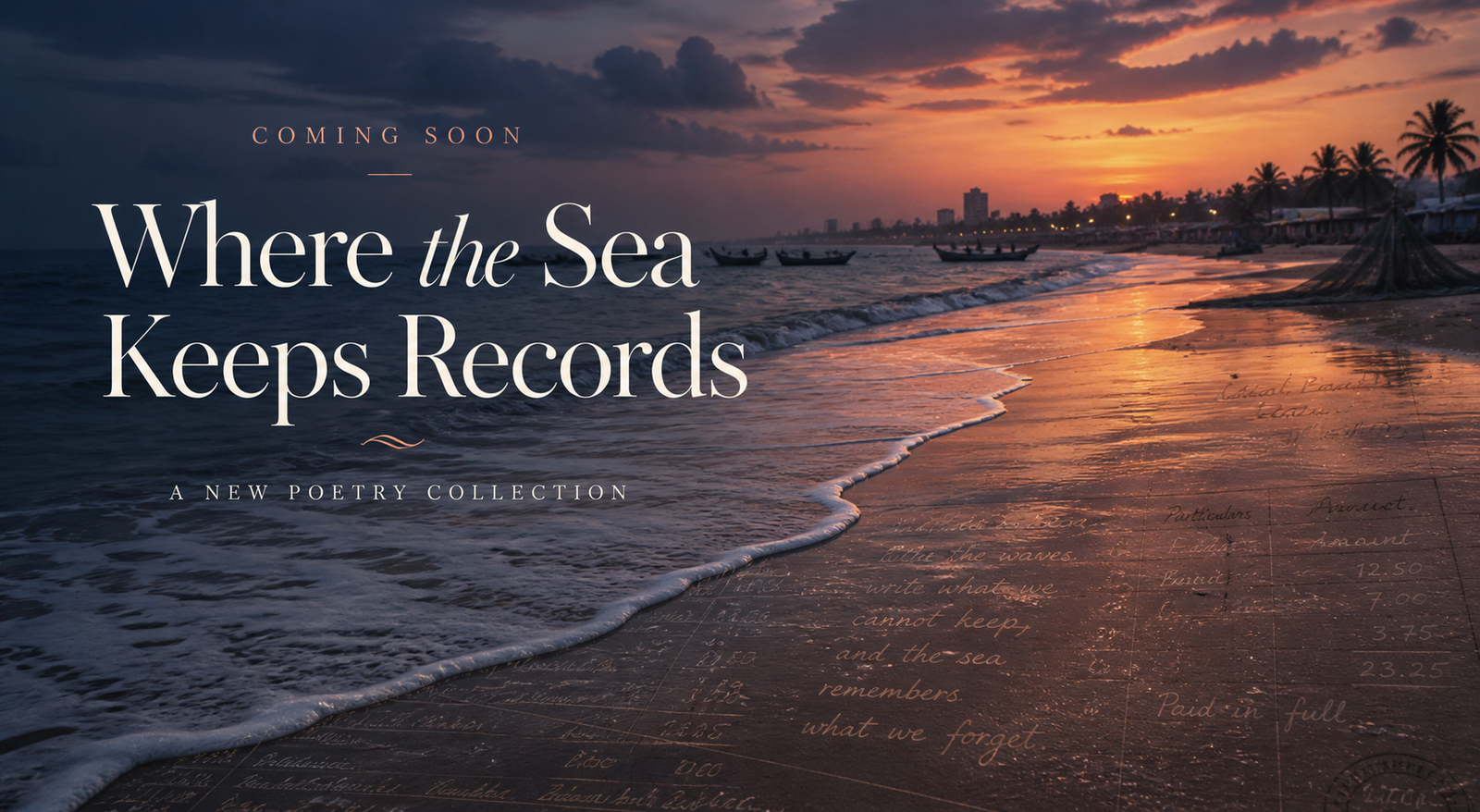
That’s the premise behind my upcoming poetry collection, Where the Sea Keeps Records: a book of short, precise poems—each one a small file, a stamped entry, a field report—from the emotional terrain we all move through but rarely name cleanly.
I didn’t set out to write “poems about feelings.” I set out to write what feelings actually do.
How resentment sits in a room like an elder nobody greets.
How fear drafts worst-case plans with perfect grammar—then the body signs before the spirit can object.
How depression can be a closed shop with the sign still up—lights on, door locked, customers knocking, and you standing inside with no key.
This book is for anyone who has ever looked functional on the outside and felt like a storm behind the ribs.
It’s also Ghana on purpose—Labadi, Makola, Korle Lagoon, Cape Coast, Tema motorway, Harmattan dust, trotro horns, the market knife that cuts cassava without emotion. Not as aesthetic. As infrastructure. Because place is not a backdrop; it’s the operating environment. And an operating environment shapes the way anger forms, the way fear trains your posture, the way grief teaches you what your body was built to carry.
The format is deliberate—because the feelings are not random
Each poem is compact—built to hit fast and stay. Think: 10–12 lines that do one job cleanly. No wandering. No filler. No “poetry voice” performance. These pieces move like memos you didn’t ask for but can’t unsee once they arrive.
The collection is organized around seven emotional regions:
- ANGER (the body’s audit function)
- FEAR (the mind’s risk office)
- SADNESS (the cost center nobody budgets for)
- JOY (the unexpected surplus)
- SURPRISE (the moment reality changes the agenda mid-meeting)
- LOVE (the only force that survives scrutiny)
- PEACE (what the nervous system looks like when it stops rehearsing disaster)
Each section is sequenced for momentum: personal → social → institutional → spiritual. That’s not a gimmick. It’s the real arc most of us live: first you feel it alone, then it shows up in your relationships, then you realize the system has a role in shaping it, and finally—if you’re lucky—you find a way to hold it without letting it run your life.
What this book is not
It’s not self-help. It’s not therapy-speak wrapped in line breaks. It’s not a motivational thread dressed up as art.
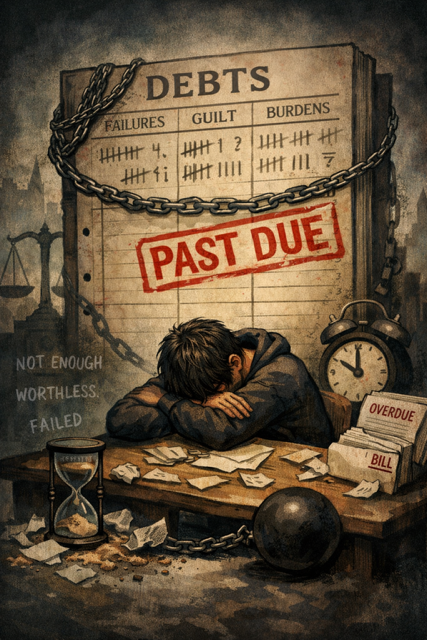
This is an emotional ledger—honest enough to be uncomfortable, structured enough to be useful.
Some poems will make you laugh because the truth can be funny when it’s sharp. (“The soup is fine, but the spoon feels too loud.”)
Some will land like a quiet insult because you recognize yourself in them.
Some will read like a mirror you didn’t consent to.
And yes—there are moments of release. Relief. Peace. The kind that feels less like “happiness” and more like your body finally unclenching without a meeting.
Why now
Because we’re living in an era where emotional labor is treated like an invisible tax.
We are expected to be resilient on demand, articulate in pain, productive in depletion, polite under pressure, and grateful for conditions that are simply survivable. We keep showing up. We keep “handling it.” We keep packaging our internal chaos into socially acceptable outputs.
Meanwhile, the sea keeps records.
It records the times you swallowed words to avoid becoming “difficult.”
It records the way you learned protocol before you learned welcome.
It records the small humiliations that don’t look like trauma on paper but still reshape your nervous system in private.
This collection is my attempt to name those records clearly—without melodrama, without denial, without pretending the world is gentle when it isn’t.
Coming soon
I’ll share the release details publicly soon (cover, launch date, and preorder link). For now, here’s the simplest promise:
If you’ve ever needed language that doesn’t flatter you—language that tells the truth and still leaves you human—this book is for you.
And if you’ve ever loved someone who couldn’t explain what they were feeling, this book might give you a map.
Not to “fix” them.
To understand what the sea has been holding.
Where the Sea Keeps Records is coming.
And when it arrives, it won’t ask permission.