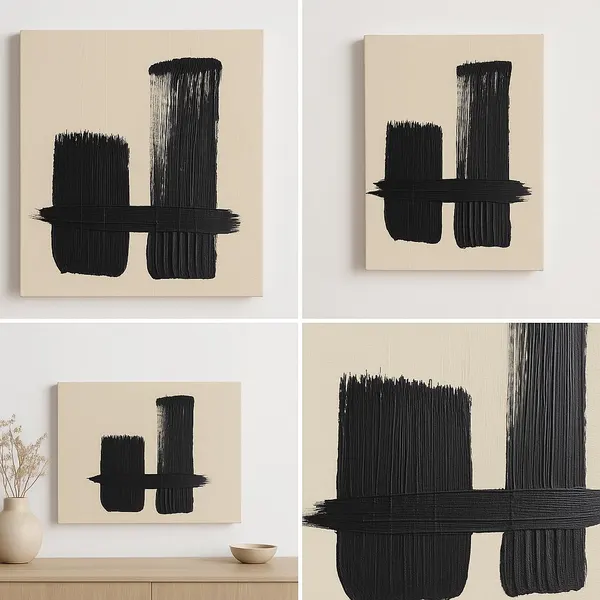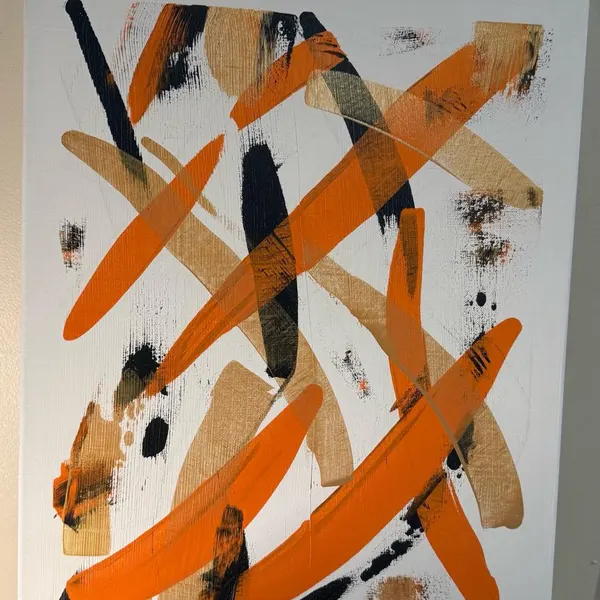
Vaeyathi is the fictional language and glyph system I developed for The Hourglass Universe. It brings together written symbols, spoken sounds, and memory. Within the stories, characters use it to communicate, preserve their identities, and interact with forces that shape existence.
The language belongs to a universe in which time, memory, and observation have physical consequences. Events can leave traces that survive their apparent ending. Memories can fracture or persist beyond the people who first experienced them. A character may encounter an echo—a surviving trace of a person, experience, or event—and discover that it can still affect the present.
Vaeyathi gives those encounters a language. Understanding it begins with three connected elements—a glyph, its spoken expression, and the concept or memory it carries.
The written foundation is the glyph, a symbol that holds meaning. A Vaeyathi glyph can express something as substantial as erasure, presence, or memory held in silence. Its spoken form allows that meaning to be voiced.
Vareth, for example, is associated with erasure or the null. Sovil carries the idea of “the unspoken,” connecting silence with memory. The names identify concepts within the language and allow characters to refer to, recognize, or express them.
These meanings reflect the conditions of the Hourglass setting. Erasure can threaten someone’s continued existence. A surviving memory may preserve a connection to someone who has disappeared. Silence can hold something that has yet to be expressed.
When a glyph appears, its significance therefore depends on what is happening around it. Readers learn its meaning through the person encountering it, the circumstances of its use, and the consequences that follow.
Sound matters as well. Vaeyathi can be spoken, whispered, or intoned, with breath and resonance forming part of its operation. Resonance describes the connection between the expression, the person using it, and what that expression reaches. A speaker’s relationship to the memory being invoked matters alongside the words themselves.
One passage expresses this relationship through a Vaeyathi Echo phrase.
“Hael-ven a’sarii kath’qallin… ∮ Ka-threni va’et xi’vael.”
Its accompanying translation reads, “This glyph cannot be cast in clarity. Only remembrance may carry it.”
The phrase introduces a condition on the glyph’s use. Understanding the symbol intellectually is insufficient for that particular act. Remembrance must carry it. The passage connects the language’s operation to lived experience and to what survives within the person using it.
A more accessible example appears in drift-rebinding, a practice the Vaeyathi developed to survive the fracturing of observational memory. In everyday terms, it helps someone maintain a coherent connection to themselves when their experience begins to break apart.
One of its ritual phrases is “Let my breath anchor the echo.” Breath becomes a means of reaching and stabilizing a surviving trace. Another, “Let me drift without drowning,” expresses the danger involved. The speaker must pass through an unstable experience while retaining enough continuity to return.
The stakes extend to identity. Losing that continuity can threaten a person’s ability to hold their memories and experiences together as their own.
Vaeyathi is also described as recursive. Here, recursion means that something returns to and acts upon an earlier state or surviving version of itself. Within the Hourglass Universe, an event and its later echo can remain connected. Encountering that echo may draw a character back into a relationship with something whose consequences are still unfolding.
The language provides a way to engage with those connections. Its glyphs and utterances belong to a world where the past can remain active.
Readers encounter Vaeyathi through inscriptions, brief exchanges, rituals, and fragments of the Codex, which preserves records and glyph knowledge throughout the stories. Each appearance offers another piece of understanding. A phrase becomes clearer when readers see why a character speaks it and what the act requires.
I built Vaeyathi around the questions that run through the Hourglass Universe. What remains of us when memory becomes unreliable? How does someone preserve a connection across absence or collapse? What responsibility comes with reaching something that still remembers?
Those questions give the language its emotional weight. When a character speaks Vaeyathi, an ancient symbol can become an immediate, personal act of remembrance, survival, or choice.