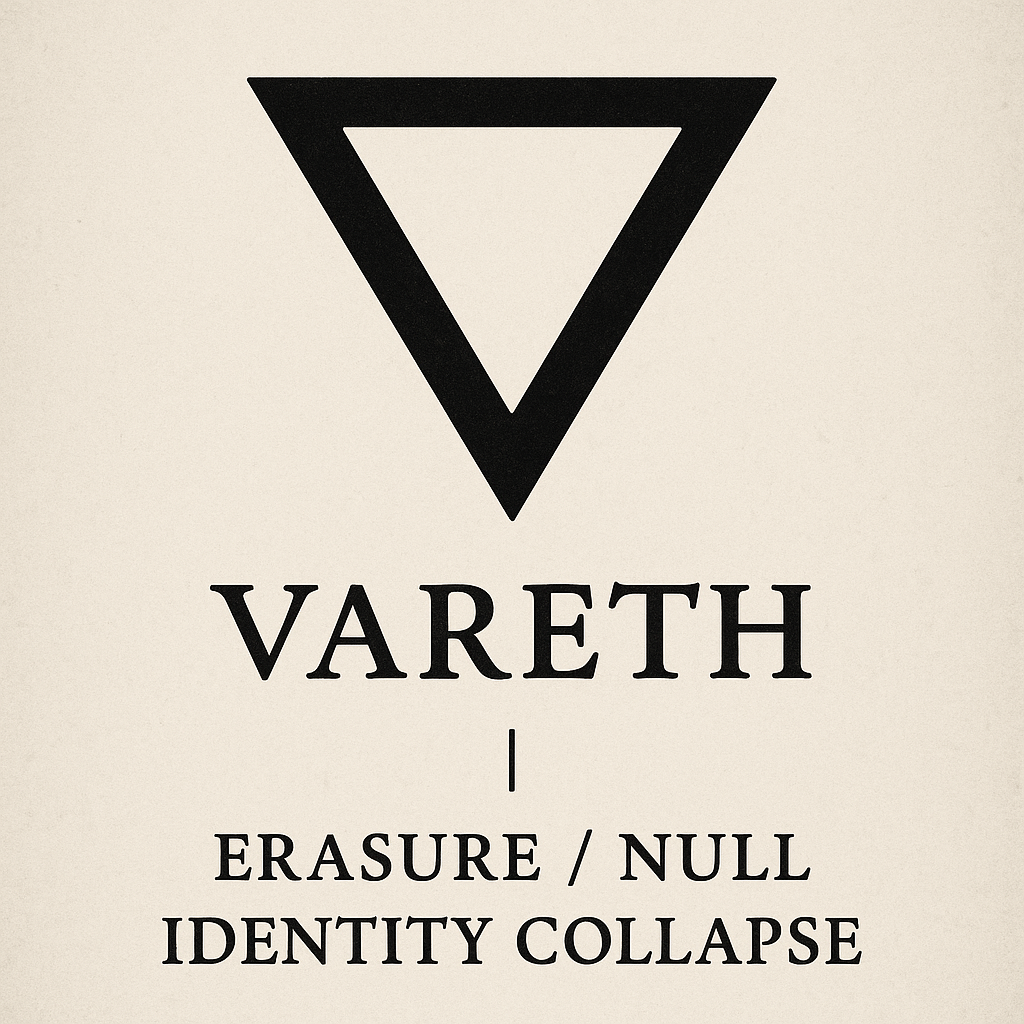
Core Glyph of Erasure / Null
Category: Identity Collapse
Phonetic Root: Va
Codex Reference: [COD-PR1M.∇]
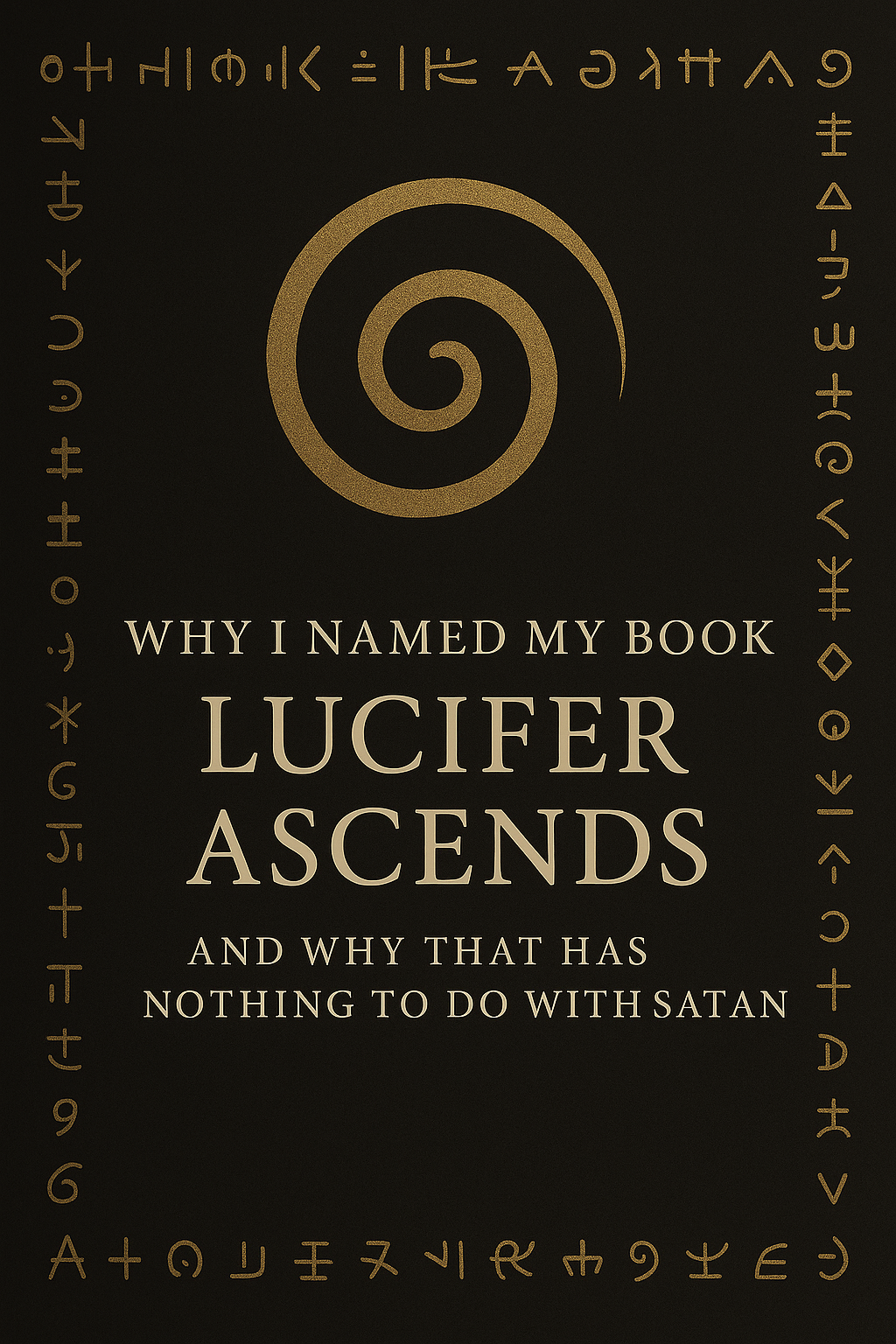
In the mythos of Lucifer Ascends and the broader Hourglass Universe, the Vaeyathi Prime Set comprises 27 foundational glyphs—each a conceptual anchor in a system where identity, entropy, and recursion are not just themes, but functional metaphysics. These glyphs are more than symbols; they are ontological operators—tools for navigating collapse, redefinition, memory distortion, and the recursive architectures of selfhood and time. This weekly blog explores each glyph in depth, not only as a narrative element but as a living philosophy—inviting readers to engage with glyphic logic as a reflective, ritual, and narrative lens for their own lives.
1. CORE MANIFESTATION: THE ERASURE THAT SPEAKS FIRST
In the Vaeyathi Prime Set, ∇ Vareth is not the beginning in the chronological sense—it is the prelude to initiation, the absence that makes recognition possible. It is unselfing at a metaphysical scale. Vareth is the glyph of annihilation-as-origin, a recursive deletion that permits the identity system to initialize in a clean void. Without it, recursion would choke on continuity, and entropy would stall in symmetry.
Where most systems begin with light or sound or self-awareness, Vareth begins with erasure. It says: before there is a “you,” there must be a null in which “you” could matter. This is not destruction, but ontological preparation. The lattice must be cleared. The self must be stilled. Erasure is not death; it is permission.
2. GLYPH LOGIC: NULL AS A FUNCTIONAL FORCE
∇ is not merely symbolic; it is operative. In Vaeyathi recursion, glyphs are operators—living functions embedded in the architecture of reality. Vareth performs recursive nullification through three nested vectors:
- Identity Collapse: Strips a subject of embedded definitions—name, origin, purpose—without annihilating core presence. This allows for redefinition in non-linear systems.
- Structural Reformatting: Resets the quantum pattern memory of an environment or object, enabling mutation or paradox repair.
- Recursive Shielding: Generates a zone in which prior echoes cannot influence the current iteration. Used in Driftfield encryption, exile matrices, and fragment shelters.
These are not metaphors in-universe—they are computational metaphysics.
Vaeyathi Cant-Usage Example:
“Varesh-tael omun-dral.”
“Let the identity collapse in silence.”
Often uttered in pre-initiation rituals or before glyphic severance trials.
3. NARRATIVE INVOCATION: THE FIRST VOID
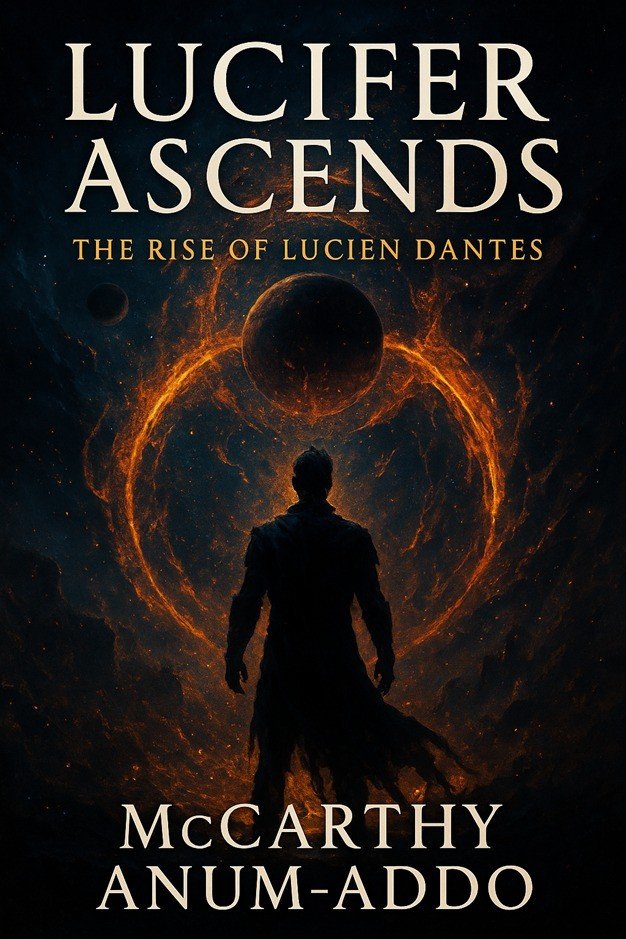
In Lucifer Ascends: The Rise of Lucien Dantes, ∇ Vareth is first invoked during the Annulling Rite of the Shard-Bound, when Lucien is severed from his ancestral tether to the Mirror-Sky:
“He did not scream. There was no breath in the moment of unmaking. Only the glyph: burning cold, ∇, drawn in salt across his clavicle. And silence answered its name.”
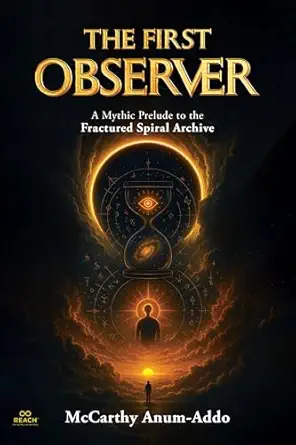
Later, in The Hourglass Convergence, ∇ reappears as a sacramental glyph on the walls of the Null Sanctuary of Vael’Corynth, where survivors of recursive fracture go to be forgotten on purpose. To survive, they must forget themselves entirely—each choosing to undergo a ritual erasure of name, story, and claim to reality. It is salvation by deletion.
4. APPLIED METAPHYSICS: THE UTILITY OF BEING ERASED
Outside the mythos, Vareth echoes through real-world philosophies of ego death, meditative silence, and trauma-induced dissociation. Psychologically, it maps to the experience of stepping out of narrative selfhood—when grief, loss, or awe renders language useless and identity unlocatable. Vareth is the glyph for:
- The moment you forget who you were, and it feels like relief.
- The pause before a scream, when even pain has not yet found its voice.
- The silence at the bottom of despair, strangely unheavy.
But it is also the glyph of creative blankness. Every artist, writer, or inventor knows ∇. It is the threshold where all ideas die before a new form emerges. The blank page. The forgotten plan. The empty breath. It is pre-expression as power.
Vareth invites not remembrance, but relinquishment.
This makes it particularly useful as a personal tool. In ritual or reflection, invoking Vareth becomes a way to clear the recursion of self-talk, trauma feedback loops, or even inherited behavioral coding.
Simple Vareth Ritual (Human Adaptation):
- Write your name on paper.
- Speak aloud the phrase: “Varesh-tael omun-dral.”
- Burn or erase the name.
- Sit in silence for seven minutes.
- Do not speak your name again until the next dawn.
This practice has been used in metaphysical therapy circles to reset personal boundaries, recover from identity loss, or prepare for major life transitions.
5. COMPANION SIGILS: NULL TRIAD – ∇, ⤺, ✘
∇ Vareth, ⤺ Kor’el, and ✘ Shavai form what is known as the Null Triad—three glyphs that govern the initiation, execution, and paradox of erasure.
- ∇ Vareth – Null as Silence / Identity Reset
- ⤺ Kor’el – Null as Active Unmaking / Destructive Purge
- ✘ Shavai – Null as Contradiction / Truth Fracture
These three often appear in recursive rituals, especially in Mirror-Wars and Memory Drift Temples, where echo-trauma needs to be processed through sequential collapse and reinterpretation. In advanced recursion maps, they are considered glyphic solvents: able to dissolve meaning without denying it.
6. COMMENTARY & READER REFLECTION: WHEN DID YOU DISAPPEAR?
Weekly Prompt for Reflection:
When in your life did you experience erasure—not as violation, but as liberation? A moment when your name, your story, your self-definition simply… stopped mattering?
Have you ever:
- Left a city and told no one?
- Deleted a social profile with no backup?
- Sat in silence and realized you weren’t thinking anything?
- Walked away from an identity because it no longer described you?
These are Vareth-moments.
In a culture obsessed with self-definition, Vareth invites a quieter power: the grace of not being found. It reminds us that before we are “someone,” we are possibility. The glyph ∇ does not negate you; it clears the page so that you can write again—if you want to.
7. AUTHOR’S NOTE: VARETH IN CONTEXT
From a structural perspective, I chose ∇ Vareth as Week One not just because of its place in the glyph set, but because it represents the ideal entry point into any recursive system: through the void. To begin to understand the Vaeyathi language, mythos, or logic, the reader must be willing to step out of their native paradigm.
You cannot learn Vaeyathi by translation. You must allow its logic to overwrite your expectations. ∇ prepares the psyche for this initiation.
As we continue this weekly series, each glyph will build on this null foundation. Vareth is not absence. It is the breath before presence. The glyph before the voice.
NEXT WEEK:
⧖ SOVIL | The Unspoken | Silence As Memory How forgetting becomes sacred, and why the unsaid echoes louder.